Share on Twitter
 Share on Facebook
 Share on LinkedIn
Meanwhile, advances in sensing, embedded computing, networking, and AI create opportunities to dramatically improve what those platforms can do.
Replacing an entire system to take advantage of those technologies can be costly, disruptive, and risky.
Increasingly, the alternative is modernization: preserve the useful elements of an existing platform while introducing a standards-based architecture that allows legacy sensors and imaging equipment to work with modern processing, networking, and intelligence technologies.
Why Legacy Integration Is Becoming More Important
Defense platforms often have much longer lifecycles than the electronics technologies used inside them.
A sensor or imaging system that continues to meet its operational requirement may rely on an older interface or architecture. At the same time, programs may want to add modern processors, AI-enabled analytics, networked displays, or additional sensors. This introduces an integration problem.
Replacing functioning equipment can increase cost and program risk. Maintaining entirely separate legacy and modern architectures introduces its own complexity.
By taking a modular approach, integrators can enable existing sensors and imaging equipment to be digitized, networked, and integrated with modern processing technologies. This helps extend the useful life of existing investments in assets while creating a practical path toward new capability.

Modernization Without Wholesale Replacement
The goal of modernization should not necessarily be to replace everything. In many cases, the more practical approach is to introduce connectivity that allows existing technologies to operate as part of a modern architecture.
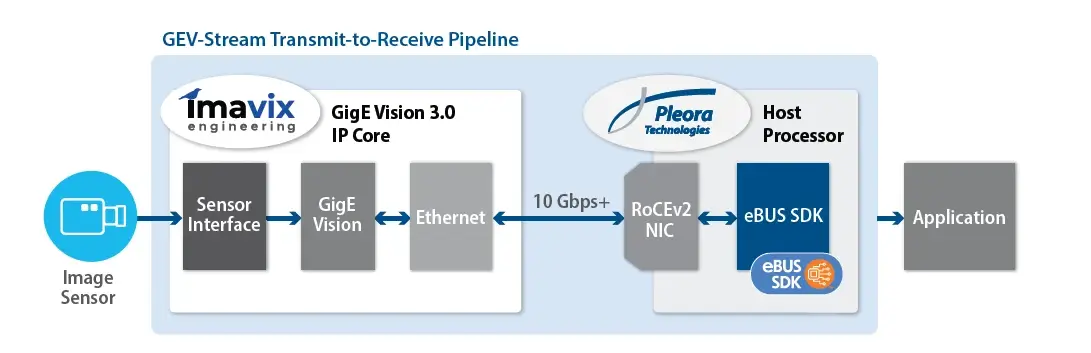
By converting legacy sensor information into networked, standards-based data, existing equipment can connect with newer processing systems and applications. This can help programs introduce improved analytics, displays, or AI capabilities without redesigning the complete sensor chain. This approach can reduce the cost and risk associated with full platform replacement while accelerating the deployment of new capabilities.
Building for the Next Upgrade
Modernization also raises a question of longer-term: what happens when the next technology needs to be integrated? A narrowly designed upgrade may address an immediate requirement but recreate the same challenge several years later.
Standards-based architecture helps break that cycle through the support of modular architectures where sensors, compute systems, applications, and displays can be integrated across distributed platforms. Multi-vendor interoperability allows components from different suppliers to operate within a unified system, reducing dependence on tightly coupled point-to-point designs.
New sensors can be introduced as mission requirements evolve. Processing technologies can be upgraded as computing capabilities improve. New applications can consume existing sensor information without forcing a redesign of the entire architecture.
Adding AI Without Replacing the Sensor
AI is one of the clearest examples of why this approach matters.
Existing investments in sensors may not need to be replaced when introducing AI-enabled detection or analytics when networked data can be sent to modern processing resources. In these instances, programs can apply new intelligence to existing sensing infrastructure while maintaining legacy devices. To reduce CPU overhead, processing can also move closer to the point of collection.
Edge processing enables information to be analyzed locally, reducing latency and minimizing reliance on communications bandwidth. Instead of transmitting every piece of raw sensor information, systems can process data locally and pass essential information onward, resulting in a modernization path that connects established sensing capabilities with today’s processing technologies.
Reducing Integration Risk Through Standards
Introducing new technology into a defense platform always creates integration considerations. Sensors, processors, displays, and applications may come from multiple vendors. If every connection requires a proprietary interface or custom development effort, complexity grows quickly.
Standards-based connectivity can provide a common framework between these elements, and is designed to support multi-vendor interoperability while maintaining the real-time performance required for mission-critical sensor information.
Extending Platform Life While Expanding Capability
Modern defense programs need to balance innovation with practical realities.
By digitizing and networking legacy sensor equipment, establishing standards-based interoperability, and enabling processing closer to the edge, defense organizations can introduce new capabilities while preserving investments in proven platforms. The result is a more incremental approach to modernization: upgrade what needs to change, preserve what continues to work, and build an architecture that is ready for the next requirement. With this shift, defense organizations can accelerate modernization while reducing development risk and extending the operational value of existing systems.